Artificial intelligence is no longer a futuristic concept reserved for tech companies. In 2026, AI has become an everyday tool for personal trainers and fitness coaches who want to work smarter, deliver better client results, and build a more profitable coaching business.
Whether you run an online coaching practice, train clients in person, or offer a hybrid model, AI can help you automate repetitive tasks, create content faster, personalize training programs at scale, and free up hours every week to focus on what you do best: coaching real people toward real results.
This guide breaks down exactly how personal trainers can start using AI today, with practical examples, real use cases, and honest advice on where AI shines and where human expertise remains irreplaceable.
What Does AI Mean for Personal Trainers?
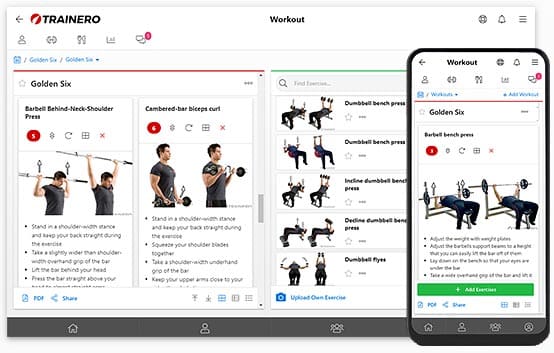
AI in personal training refers to the use of intelligent software tools that can analyze data, generate content, and automate tasks that would otherwise take significant manual effort. These tools range from general-purpose AI assistants like ChatGPT and Claude to fitness-specific features built into coaching platforms like Trainero.
For personal trainers, AI is not about replacing the coach. It is about removing the bottlenecks that prevent coaches from scaling their impact. Consider the daily reality of a busy personal trainer: writing workout programs, creating meal suggestions, responding to client messages, producing social media content, managing schedules, and tracking progress across dozens of clients. AI can assist with nearly every one of these tasks, often reducing what takes an hour to just a few minutes.
The trainers who thrive in 2026 are not the ones who fear AI. They are the ones who learn to use it as a force multiplier for their expertise.
5 Practical Ways Personal Trainers Can Use AI Right Now
1. Content Creation and Marketing
Producing consistent content for social media, blogs, and email newsletters is essential for attracting new clients in 2026. It is also one of the biggest time sinks for solo trainers.
AI can dramatically speed up your content creation process. You can use it to brainstorm post ideas based on trending fitness topics, draft captions for Instagram or TikTok, outline blog articles, write email sequences for lead nurturing, and repurpose long-form content into shorter formats.
For example, you might ask an AI tool to generate 10 Instagram post ideas for a personal trainer who specializes in training busy professionals over 40. Or you could have it write a 5-email welcome sequence for new subscribers to your newsletter, with each email addressing a common fitness myth.
The trainers who succeed with AI-assisted content are those who add their unique voice, real experiences, and genuine expertise on top of the AI-generated framework. AI gives you the skeleton; you bring the personality and credibility that makes people want to work with you.

2. Smarter Client Communication
Clear, consistent communication is one of the strongest predictors of client retention. Yet many trainers struggle to keep up with check-in messages, motivational responses, and progress feedback across a full client roster.
AI assistants excel at helping you draft personalized responses quickly. You can ask AI to help you write an encouraging response to a client who feels frustrated by slow progress, or to craft a check-in message that acknowledges a client’s consistency while gently introducing the next phase of their program.
Some practical communication use cases include drafting welcome messages for new clients, creating FAQ responses for common questions, writing re-engagement messages for clients who have gone quiet, and composing professional yet warm feedback on progress photos or training logs.
The goal is not to send AI-generated messages word-for-word. Use them as a starting point that you personalize with specific details about the client. Your knowledge of their personality, their challenges, and their wins is what makes the message meaningful.
3. Client Onboarding Automation
First impressions matter. A smooth onboarding experience sets the tone for the entire coaching relationship and significantly impacts long-term retention.
AI can help you build comprehensive onboarding systems, from intake questionnaires that go deeper than basic fitness history to welcome guides that explain your coaching process, communication expectations, and how to use your training platform.
Consider using AI to create a lifestyle assessment form that captures not just training history but sleep patterns, stress levels, work schedule, nutrition habits, and personal motivators. This gives you a richer picture of the client from day one and shows them that your coaching goes beyond just workouts.
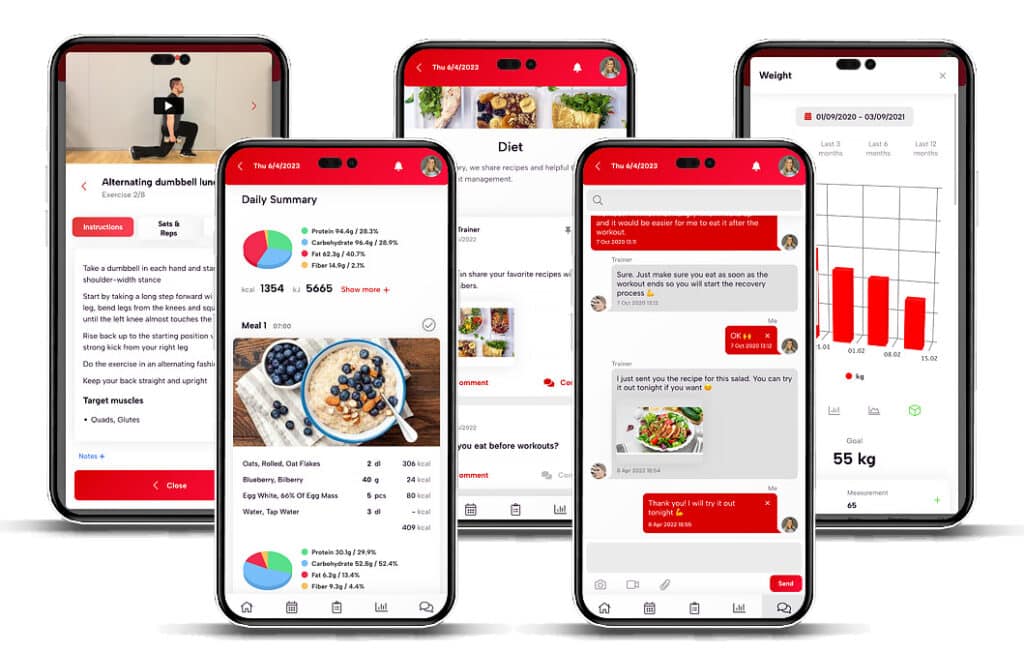
When combined with a coaching platform like Trainero, which allows you to manage clients, share content, and communicate all in one place, AI-enhanced onboarding becomes a powerful retention tool.
4. Business Strategy and Planning
Many personal trainers are excellent coaches but struggle with the business side of their practice. AI can serve as a brainstorming partner for pricing strategies, service packaging, marketing plans, and growth initiatives.
You can ask AI to help you analyze different pricing models for online coaching, compare the pros and cons of subscription-based packages versus per-session pricing, or develop a launch plan for a new group training program. AI can also help you draft business proposals, create financial projections, and identify potential revenue streams you may not have considered.
Think of AI as a business advisor that is available around the clock. It will not give you a finished strategy, but it will help you think through options, identify blind spots, and structure your ideas into actionable plans.
5. Data Analysis and Progress Tracking
As wearable technology becomes more sophisticated, trainers have access to more client data than ever before. Heart rate variability, sleep quality, daily step counts, and training load metrics can all inform programming decisions.
AI tools can help you interpret patterns in client data and translate raw numbers into coaching insights. Instead of manually reviewing spreadsheets, you can use AI to identify trends, flag potential overtraining signals, and suggest program adjustments based on recovery metrics.
For trainers using platforms that integrate with wearables and track client progress over time, AI-powered analysis turns data into a competitive advantage. You can offer a more responsive, evidence-based coaching experience that adapts to how each client is actually responding to their program.
Where AI Falls Short: The Human Edge
While AI is a powerful tool, it is important to be honest about its limitations. Understanding where AI falls short will help you use it more effectively and position your human expertise as the irreplaceable core of your coaching.
AI cannot build real relationships. The trust, empathy, and personal connection that define great coaching cannot be automated. Clients stay because of how you make them feel, not because of how efficiently their program was generated.
AI does not understand context the way you do. It does not know that your client just went through a difficult breakup, that they have a history of disordered eating, or that they perform better with positive reinforcement than tough love. These nuances require human judgment and emotional intelligence.
AI can generate inaccurate information. AI tools sometimes produce content that sounds confident but is factually wrong, especially when it comes to exercise science, injury management, and clinical nutrition. Always verify AI outputs against your professional knowledge and current research.
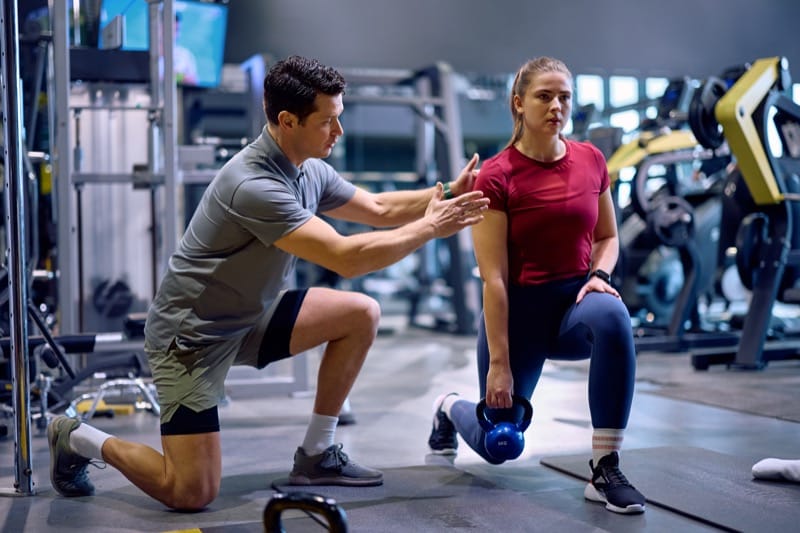
AI cannot assess movement quality. No AI tool can watch a client squat and identify the subtle compensations that indicate a mobility restriction or an injury risk. In-person and video-based coaching still requires a trained eye.
AI lacks accountability. A client can ignore an AI-generated program without consequence. The accountability that comes from a real coaching relationship, someone who notices when you skip a session, celebrates your wins, and adjusts the plan when life gets messy, is something AI simply cannot replicate.
The most successful trainers in 2026 are those who use AI to handle the tasks that do not require a human touch, freeing them to invest more energy in the moments that do.
How to Get Started with AI: A Step-by-Step Approach
If you are new to AI, the best approach is to start small and build gradually. Here is a practical roadmap.
Tip 1: Experiment with prompts. Open ChatGPT, Claude, or your preferred AI assistant and start with simple tasks. Ask it to draft a workout program, write a social media caption, or help you respond to a client question. Pay attention to what works and what needs heavy editing.
Tip 2: Identify your biggest time drains. Make a list of the tasks that consume the most time in your coaching business. Common ones include program writing, content creation, client messaging, and administrative work. These are your AI optimization targets.
Tip 3: Build templates and systems. Use AI to create reusable templates: onboarding questionnaires, email sequences, program frameworks, and content calendars. Save your best prompts so you can reuse them consistently.
Tip 4: Integrate AI into your coaching platform. Connect your AI workflows with your coaching software. If you use Trainero, for example, you can use AI-generated content to populate your client programs, course materials, and communication templates within the platform.
Tip 5: Refine and expand. As you become more comfortable, explore more advanced use cases like data analysis, business strategy, and marketing automation. Stay curious, keep experimenting, and always evaluate AI outputs through the lens of your professional expertise.
The Future of AI in Personal Training
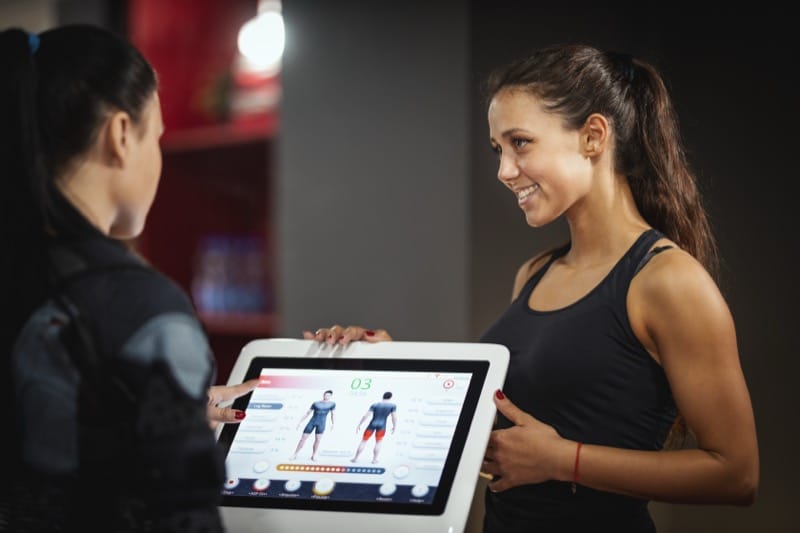
The role of AI in fitness coaching will only grow in the coming years. We are already seeing the emergence of AI-powered movement analysis, voice-activated coaching assistants, predictive analytics for injury prevention, and hyper-personalized programming that adapts in real time based on wearable data.
For personal trainers, this is not a threat. It is an opportunity. The coaches who embrace AI as a tool, while doubling down on the human skills that make coaching transformative, will be the ones who build thriving, scalable businesses.
AI handles the heavy lifting. You provide the human touch. Together, that is a coaching experience no algorithm can match on its own.
Ready to Level Up Your Coaching Business?
The best time to start integrating AI into your coaching practice is now. And the best place to deliver your AI-enhanced coaching is a platform built specifically for fitness professionals.
Trainero gives you everything you need to build workout and diet plans, create online courses, manage clients and groups, communicate with your clients, and share content, all in one comprehensive platform. Whether you coach online, in person, or both, Trainero helps you deliver a professional coaching experience that keeps clients engaged and coming back.
Start your free 14-day trial today and discover how Trainero can help you build a smarter, more efficient coaching business.

Unlock your fitness potential with Trainero! Get a 14-day free trial and access personalized workout plans, expert coaching, and progress tracking—all in one app. No commitments, just results. Start your free trial today and take your fitness journey to the next level!