Introduction
Tracking body composition gives personal trainers valuable insight into client progress beyond simple scale weight. But with multiple measurement methods available, from professional laboratory equipment to affordable home devices, choosing the right approach can be confusing.
This guide examines the most common body composition measurement methods, compares their accuracy and practicality, and helps you determine which tools make sense for your coaching practice.
Understanding Body Composition Measurement
Body composition refers to the proportions of fat, muscle, bone, and water that make up total body weight. Unlike scale weight alone, body composition data reveals whether a client is losing fat, gaining muscle, or both.
The challenge lies in measuring these components accurately. No method is perfect, and each involves trade-offs between precision, cost, accessibility, and convenience.
Bioelectrical Impedance Analysis (BIA)
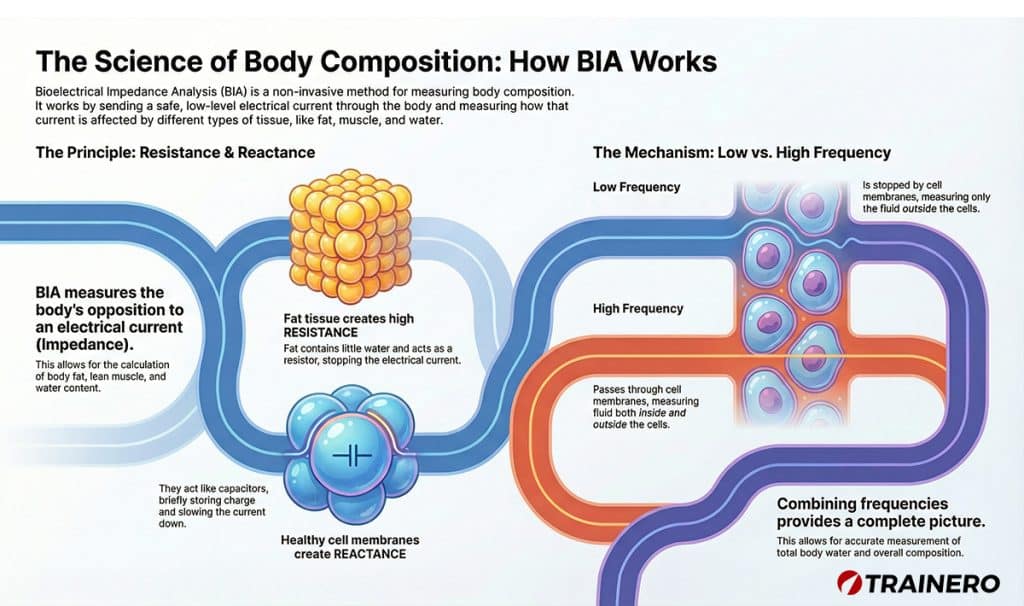
Bioelectrical impedance analysis measures body composition by sending a small electrical current through the body. Since different tissues conduct electricity differently, the device estimates the proportions of fat mass, lean mass, and water.
Professional-Grade BIA Devices
Medical and fitness facilities use professional BIA equipment that provides more detailed and accurate readings than consumer devices.
Examples of professional BIA systems:
- InBody (various models from InBody 270 to InBody 970)
- Seca mBCA series
- Tanita MC-780 and similar multi-frequency analyzers
How they work:
Professional devices typically use multiple frequencies and multiple electrode contact points. The user stands on a platform while holding hand electrodes, allowing current to travel through both upper and lower body segments. Multi-frequency analysis improves accuracy by measuring tissue response at different electrical frequencies.
Advantages:
- Provides segmental analysis (separate readings for arms, legs, trunk)
- Multi-frequency measurement improves accuracy
- Quick measurement time (under 60 seconds)
- No radiation exposure
- Generates detailed printable reports
- Tracks changes reliably over time
Limitations:
- Equipment costs range from 2,000 to 20,000 euros or more
- Hydration status significantly affects readings
- Less accurate for very lean or obese individuals
- Results vary between different device brands
Accuracy: Professional BIA devices typically show 3-5% margin of error for body fat percentage compared to reference methods like DEXA.
Consumer BIA Devices (Smart Scales)
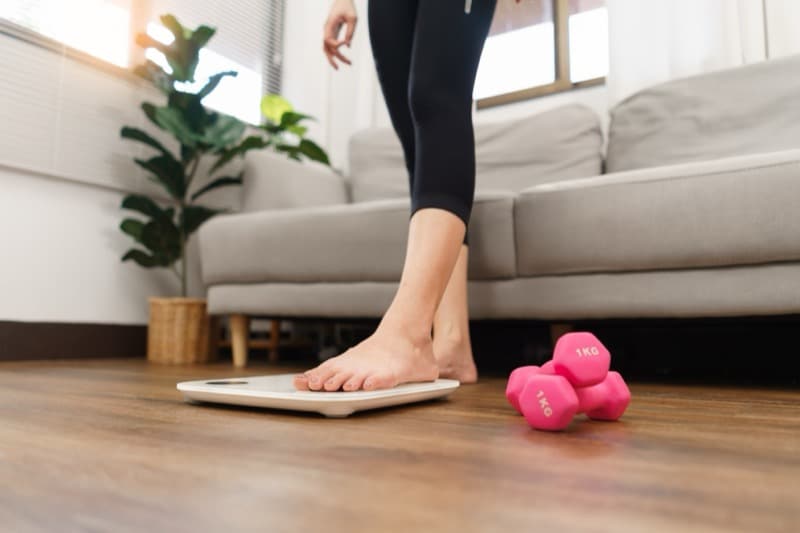
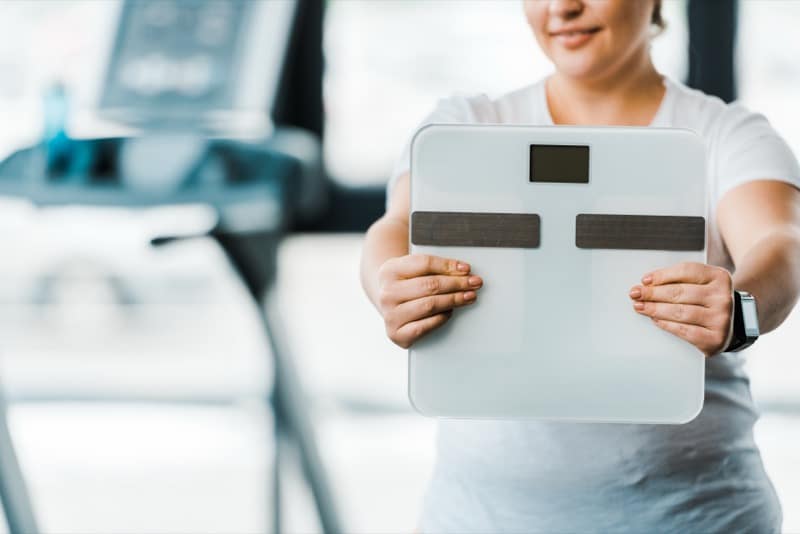
Home smart scales bring BIA technology to consumers at accessible price points. Brands like Fitbit (Aria series), Withings, Tanita, Omron, and Xiaomi offer scales that estimate body fat percentage alongside weight.
How they work:
Most consumer scales use foot-to-foot measurement with two or four electrodes on the scale platform. The electrical current travels through the lower body only, and the device estimates total body composition using algorithms based on population data.
Advantages:
- Affordable (typically 50-200 euros)
- Convenient for daily home use
- Automatic data syncing to smartphone apps
- Useful for tracking trends over time
- No special training required
Limitations:
- Foot-to-foot measurement path limits accuracy
- Single frequency analysis is less precise
- Highly sensitive to hydration, recent meals, and exercise
- Absolute values may differ significantly from clinical methods
- Algorithm accuracy varies by brand and model
Accuracy: Consumer BIA scales typically show 5-8% or greater margin of error for body fat percentage. However, they can still track relative changes effectively when used under consistent conditions.
Practical application: Consumer scales like Fitbit Aria work best for monitoring trends rather than obtaining precise body fat numbers. Instruct clients to weigh under consistent conditions (same time of day, similar hydration) and focus on the direction of change over weeks and months.
DEXA (Dual-Energy X-Ray Absorptiometry)
DEXA scanning is widely considered the gold standard for body composition measurement in clinical and research settings.
How it works:
A DEXA scanner passes two X-ray beams of different energy levels through the body. Different tissues (bone, fat, lean mass) absorb these beams differently, allowing the machine to calculate precise body composition. The scan produces a detailed image showing fat distribution throughout the body.
Advantages:
- High accuracy and precision (typically 1-2% error margin)
- Provides regional body composition data
- Measures bone mineral density as well
- Results are highly reproducible
- Considered the reference standard for validating other methods
Limitations:
- Requires specialized equipment and trained operators
- Cost per scan typically 100-300 euros
- Involves low-dose radiation exposure
- Not suitable for frequent repeated measurements
- Limited availability (hospitals, research facilities, some specialized clinics)
- Client must lie still for 10-20 minutes
Practical application: DEXA scans work well for establishing accurate baseline measurements or periodic progress checks (every 3-6 months). The cost and accessibility make it impractical for frequent monitoring.
Other Laboratory Methods
Several other methods exist for measuring body composition, though they are less commonly used in fitness settings.
Hydrostatic Weighing (Underwater Weighing)
This method calculates body density by comparing weight on land to weight while submerged in water. Fat is less dense than lean tissue, so higher body fat results in greater buoyancy.
Accuracy: Very high (comparable to DEXA) when performed correctly.
Limitations: Requires specialized tank equipment, trained operators, and complete lung exhalation during measurement. The process can be uncomfortable, and facilities are rare.
Air Displacement Plethysmography (Bod Pod)
Similar principle to underwater weighing, but uses air displacement instead of water to measure body volume and calculate density.
Accuracy: Good accuracy (2-3% error margin), though slightly less precise than DEXA.
Limitations: Equipment is expensive and primarily found in research facilities and universities. More comfortable than underwater weighing but still requires specialized setup.
Skinfold Calipers
A trained practitioner uses calipers to measure subcutaneous fat thickness at specific body sites. These measurements feed into equations that estimate total body fat percentage.
Accuracy: Highly dependent on practitioner skill. Experienced measurers achieve reasonable accuracy (3-4% error), while inexperienced users may see much larger errors.
Limitations: Requires training and practice to perform consistently. Only measures subcutaneous fat, not visceral fat. Some clients find the process uncomfortable or intrusive.
Practical application: Skinfold measurement can be cost-effective for trainers willing to invest in learning proper technique. Consistency matters more than absolute accuracy for tracking progress.
Traditional Methods: Scale Weight and Tape Measurements
Before examining how these compare to body composition methods, it is worth understanding what traditional tools actually measure.
Scale Weight
A standard scale measures total body mass, including fat, muscle, bone, water, and everything else. It provides no information about what makes up that weight.
Advantages:
- Inexpensive and universally available
- Simple to use
- Objective and reproducible
- Useful for tracking overall mass changes
Limitations:
- Cannot distinguish between fat loss and muscle loss
- Daily fluctuations from water, food, and other factors obscure trends
- Can be misleading or demotivating for clients building muscle while losing fat
Tape Measurements (Circumference Measurements)
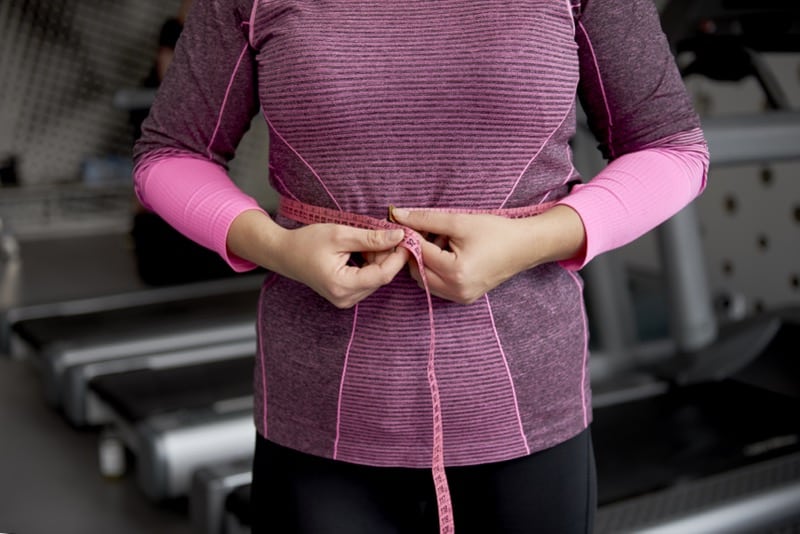
Measuring circumferences at standardized body sites (waist, hips, chest, arms, thighs) tracks changes in body dimensions over time.
Advantages:
- Very inexpensive (just a tape measure)
- Easy to perform with minimal training
- Tracks regional changes that scale weight misses
- Waist circumference correlates with health-relevant visceral fat
- Not affected by hydration status
Limitations:
- Does not directly measure body composition
- Requires consistent measurement technique and locations
- Changes may be small and slow to appear
- Some clients feel uncomfortable with body measurements
Comparing Methods: Accuracy vs. Practicality
The table below summarizes key factors for each measurement approach.
| Method | Accuracy | Cost | Accessibility | Frequency | Best Use |
|---|---|---|---|---|---|
| DEXA | Excellent (1-2%) | High per scan | Low | Every 3-6 months | Baseline and periodic validation |
| Professional BIA | Good (3-5%) | High equipment cost | Medium | Monthly or as needed | Regular detailed assessments |
| Consumer BIA (smart scales) | Moderate (5-8%+) | Low | High | Daily/weekly trends | Home monitoring between sessions |
| Skinfold calipers | Variable (3-5% if skilled) | Low | High | Monthly | Budget-friendly tracking |
| Hydrostatic/Bod Pod | Excellent (2-3%) | High | Very low | Occasionally | Research or special cases |
| Scale weight | N/A (no composition) | Very low | Very high | Daily/weekly | Overall mass tracking |
| Tape measurements | N/A (dimensions only) | Very low | Very high | Bi-weekly/monthly | Tracking shape changes |
What Makes Sense for Personal Trainers?
Choosing the right measurement approach depends on your practice, your clients, and your goals. Here are practical recommendations.
The Pragmatic Combination Approach
For most personal trainers, a combination of methods provides the best balance of insight and practicality.
Recommended toolkit:
- Regular scale weight – Track overall mass trends weekly or bi-weekly
- Tape measurements – Measure key circumferences (waist, hips, and other relevant sites) monthly
- Progress photos – Visual documentation every 4-8 weeks under consistent conditions
- Consumer smart scale at home (optional) – Let clients track daily trends if it supports their motivation
- Professional BIA or DEXA periodically – Every 3-6 months for detailed body composition data
This combination captures different aspects of progress without requiring expensive equipment or frequent laboratory visits.
When Professional Body Composition Measurement Adds Value
Consider investing in professional measurements when:
- Clients have specific body composition goals (athletes, competitors, medical requirements)
- Progress appears stalled and you need detailed data to guide adjustments
- Clients are highly motivated by numbers and data
- You want to establish accurate baselines at the start of a program
- Validating that your program is achieving the desired fat loss vs. muscle preservation balance
When Simple Methods Are Sufficient
For many general fitness clients, scale weight combined with tape measurements and progress photos provides adequate feedback without the cost and complexity of body composition analysis.
Simple methods work well when:
- The primary goal is general fitness improvement rather than specific body composition targets
- Clients feel overwhelmed or anxious about detailed body measurements
- Budget constraints limit access to professional testing
- Consistency in measurement is more important than precision
Managing Client Expectations
Whichever methods you use, educate clients about what the numbers mean and their limitations.
Key points to communicate:
- All body composition methods have error margins; focus on trends, not single readings
- Daily weight fluctuations are normal and do not reflect true fat changes
- Body composition changes slowly; expect meaningful differences over months, not days
- Different methods produce different absolute numbers; do not compare results across methods
- Progress shows in many ways beyond measurements (energy, strength, how clothes fit, health markers)
Consistency Matters More Than Precision
The most important factor in tracking progress is consistency. Whatever method you choose, use the same approach each time under similar conditions.
A consumer smart scale used consistently will reveal meaningful trends over time, even if its absolute body fat reading differs from a DEXA scan. Switching between methods or varying measurement conditions introduces noise that obscures real progress.
Conclusion
Body composition measurement offers valuable insight beyond scale weight, but no method is perfect. Professional techniques like DEXA and multi-frequency BIA provide the most accurate snapshots, while consumer devices and traditional measurements offer practical day-to-day tracking.
For most personal training practices, a combined approach works best: regular scale weight and tape measurements for ongoing monitoring, supplemented by periodic professional body composition assessments for detailed data. Consumer smart scales like those from Fitbit, Withings, or Tanita can support client accountability and trend tracking between sessions.
The goal is not perfect measurement precision but rather consistent tracking that reveals meaningful progress over time. Choose methods that fit your practice, your clients’ needs, and your budget, then apply them consistently for the clearest picture of client progress.

Unlock your fitness potential with Trainero! Get a 14-day free trial and access personalized workout plans, expert coaching, and progress tracking—all in one app. No commitments, just results. Start your free trial today and take your fitness journey to the next level!