
When stepping on a scale, you see just one number. But that single figure tells you almost nothing about your actual health or fitness level. Two people with identical weights can have dramatically different bodies. One might carry mostly lean muscle, while the other stores excess fat around vital organs. This is why body composition measurement has become an essential tool for anyone serious about their health and fitness journey.
Body composition refers to the percentages of fat, muscle, bone, and water that make up your total body weight. Understanding these proportions provides far more valuable insights than weight alone, helping you set realistic goals, track meaningful progress, and identify potential health risks before they become serious problems.
Why Body Composition Matters More Than Weight
Body Mass Index (BMI) has long been the standard screening tool for weight-related health issues. However, BMI only considers height and weight, completely ignoring the crucial distinction between fat and muscle tissue. A muscular athlete might be classified as overweight according to BMI, while someone with low muscle mass and high body fat could fall within the normal range.
Research consistently shows that body composition, particularly the distribution of fat tissue, is a much stronger predictor of metabolic health than BMI alone. Studies have demonstrated that individuals with normal BMI but excessive visceral fat face significantly elevated risks of cardiovascular disease, type 2 diabetes, and metabolic syndrome. This phenomenon, often called being metabolically obese but normal weight, highlights why looking beyond the scale is essential.
For fitness enthusiasts, body composition tracking reveals the true effects of training programs. When you start resistance training, your weight might stay the same or even increase while your body becomes leaner and stronger. Without body composition data, this progress remains invisible, potentially leading to frustration and abandoned fitness goals.
Methods You Can Use at Home

Tape Measure Assessments
The simplest and most accessible method involves nothing more than a flexible tape measure. Waist circumference, measured at the narrowest point between your ribs and hip bones, provides surprisingly valuable health information. The waist-to-height ratio has emerged as a particularly useful metric, with health guidelines recommending keeping your waist measurement below half your height.
For more comprehensive tracking, you can measure multiple sites including chest, waist, hips, thighs, and arms. Recording these measurements weekly or monthly creates a detailed picture of where your body is changing, whether you are losing fat from your midsection or gaining muscle in your arms and legs.
The advantages of tape measurements are obvious: they are free, can be done anytime, and require no special equipment. The consistency of technique matters more than absolute accuracy, making this method excellent for tracking personal trends over time.
Consumer Body Composition Scales
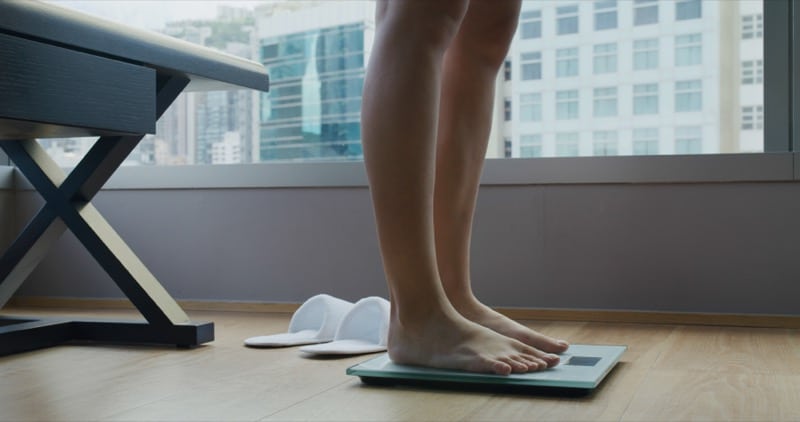
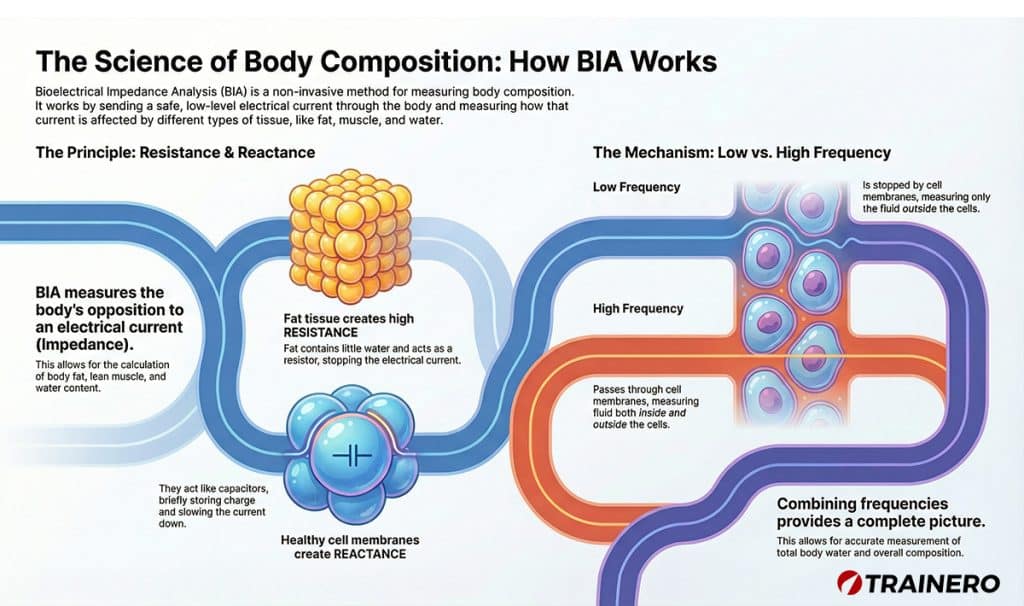
Modern smart scales use bioelectrical impedance analysis (BIA) to estimate body fat percentage, muscle mass, and other metrics. These devices send a small electrical current through your body and measure resistance. Since fat, muscle, and water conduct electricity differently, the device can estimate your body composition.
However, consumer-grade BIA devices have significant limitations. Research shows they can have error rates of 4 to 8 percent for body fat estimation. They tend to overestimate body fat in lean individuals and underestimate it in those carrying excess weight. Hydration levels, recent exercise, food intake, and even skin temperature can all affect readings.
That said, these scales excel at tracking trends over time when used consistently. Weigh yourself at the same time each day, preferably in the morning after using the bathroom but before eating or drinking. The absolute numbers may not be perfectly accurate, but the direction of change will be meaningful.
Skinfold Calipers
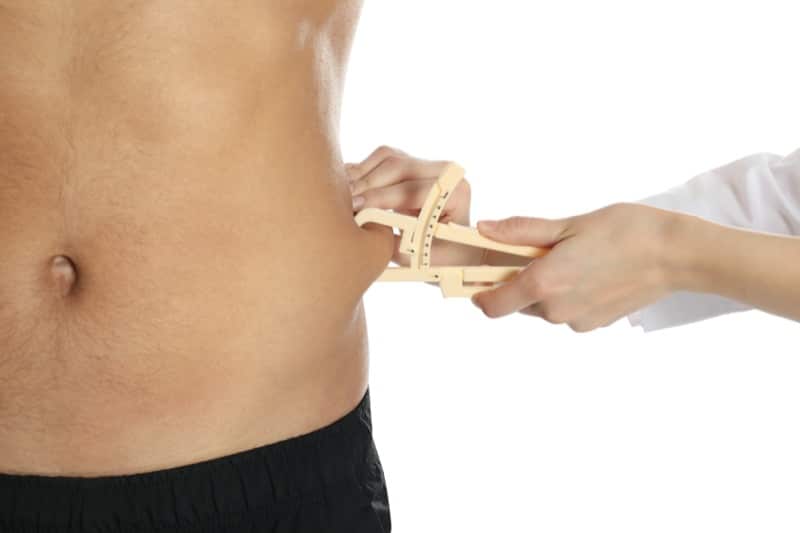
Skinfold measurements use calipers to pinch and measure the thickness of subcutaneous fat at specific body sites. Common protocols involve three to seven measurement locations, with results entered into equations that estimate overall body fat percentage.
While inexpensive calipers are available for home use, accurate skinfold measurement requires significant practice. Locating the correct anatomical sites, applying consistent pressure, and taking measurements at the proper angle all affect accuracy. Error rates of 3.5 to 5 percent are common even with trained practitioners.
Professional Methods with Your Personal Trainer
Working with a qualified personal trainer opens access to more sophisticated body composition assessment methods, along with expert interpretation of results.
Professional-Grade BIA Devices
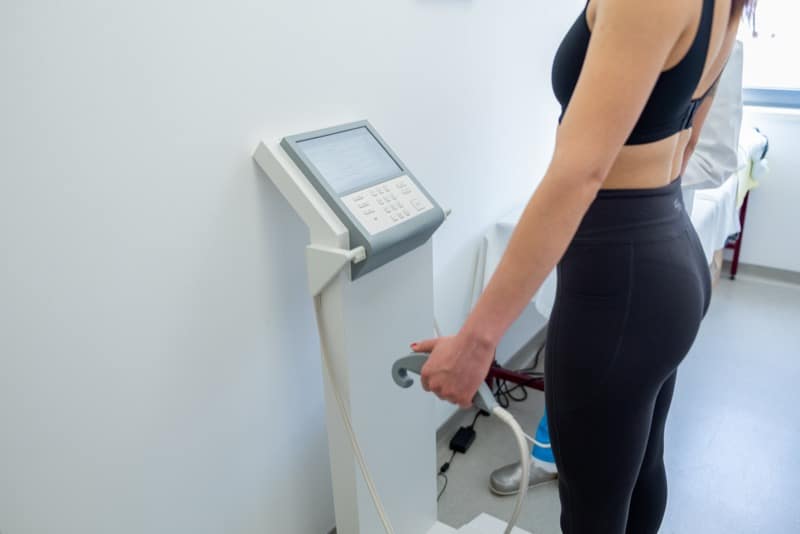
Many fitness facilities now feature professional multifrequency BIA devices such as InBody analyzers. These use multiple electrical frequencies and eight-point electrode contact to provide segmental analysis of your body composition, meaning they can show differences between your arms, legs, and torso separately.
Research published in 2024 demonstrates that professional-grade BIA devices offer high test-retest reliability, meaning repeated measurements are very consistent. While they still show some systematic differences compared to gold-standard methods, typically underestimating body fat by around 3 to 4 percent, their precision makes them valuable for tracking changes over time.
Your personal trainer can ensure proper testing protocols are followed, compare results over time, and explain what the various metrics mean for your specific goals. They can also help identify if asymmetries exist between left and right sides of your body, which might indicate muscle imbalances worth addressing.
Expert Skinfold Assessment
When performed by an experienced practitioner, skinfold measurements become much more reliable. Certified personal trainers who have undergone anthropometric training can achieve consistent results using standardized protocols. Many use sport-specific equations validated for athletic populations.
The main advantage of professional skinfold testing is its ability to track changes in specific body regions. Your trainer can monitor whether you are losing fat from your midsection, where most health risks concentrate, or building muscle in targeted areas. This site-specific feedback proves invaluable for adjusting nutrition and training programs.
Clinical Body Composition Methods in Healthcare
Healthcare providers have access to the most sophisticated body composition assessment technologies, typically reserved for clinical research, diagnosing medical conditions, and monitoring patients with specific health concerns.
Dual-Energy X-Ray Absorptiometry (DEXA)
DEXA scans have become the reference standard for body composition assessment in both research and clinical settings. Originally developed to measure bone mineral density, DEXA technology can accurately differentiate between bone, lean tissue, and fat mass throughout the entire body.
A DEXA scan involves lying on a table while a scanning arm passes over your body, emitting low-dose X-rays. The procedure takes about 10 to 20 minutes and provides comprehensive data including total body fat percentage, regional fat distribution, lean mass in each body segment, and bone density measurements.
Healthcare providers may recommend DEXA scans for patients with eating disorders, cancer, malabsorption conditions, or significant obesity. The precision error of approximately 1.5 to 2.5 percent makes DEXA valuable for monitoring treatment effectiveness and disease progression.
CT and MRI Imaging
Computed tomography (CT) and magnetic resonance imaging (MRI) represent the gold standard for measuring visceral fat and ectopic fat deposits within organs. These imaging technologies can visualize and quantify fat storage in locations that other methods cannot assess.
CT scans taken at specific spinal levels can precisely measure visceral adipose tissue area, providing the most accurate assessment of this metabolically dangerous fat depot. MRI offers similar capabilities without radiation exposure, though at higher cost and longer scan times. These methods are typically reserved for research studies or clinical situations where detailed fat distribution information is medically necessary.
Tape Measure Versus Body Composition Analysis: Which Should You Use?
Both approaches have their place in a comprehensive fitness tracking strategy, and the choice between them depends on your goals, budget, and access to equipment.
Tape measurements offer unmatched accessibility and zero cost. They require no special equipment, can be performed anywhere, and provide direct feedback about regional changes. Waist circumference in particular correlates strongly with visceral fat and metabolic health risk, making it a clinically meaningful metric that you can track yourself.
However, tape measurements tell you nothing about the ratio of fat to muscle within those measurements. Two people with identical waist circumferences could have very different body compositions, one with dense abdominal muscle and the other with predominantly fat tissue.
Body composition analysis methods attempt to quantify these internal differences. BIA devices and professional assessments estimate how much of your weight comes from fat versus lean tissue. This information proves especially valuable when your goal involves body recomposition, simultaneously losing fat while gaining muscle.
The most effective approach combines both methods. Use tape measurements weekly to track regional changes and body composition analysis monthly to monitor your overall fat-to-muscle ratio. This combination provides a comprehensive picture of your progress while accounting for the limitations of each method individually.
The Hidden Danger: Understanding Visceral Fat
Not all body fat poses equal health risks. Visceral fat, stored deep within the abdominal cavity surrounding vital organs like the liver, pancreas, and intestines, represents a far greater threat than subcutaneous fat stored just beneath the skin.
Research has consistently demonstrated that visceral fat accumulation is a stronger predictor of metabolic syndrome than overall body mass index. Longitudinal studies show that increases in visceral fat area independently increase the risk of developing metabolic syndrome, with a 28 percent greater hazard for each standard deviation increase in visceral fat, regardless of changes in body weight.
What makes visceral fat so dangerous? Unlike subcutaneous fat, which primarily serves as energy storage, visceral adipose tissue behaves as an active endocrine organ. It releases inflammatory cytokines, disrupts insulin signaling, and contributes to liver fat accumulation. These effects create a cascade of metabolic problems including insulin resistance, elevated blood lipids, high blood pressure, and increased cardiovascular risk.
Remarkably, visceral fat poses significant health risks even in individuals with normal body weight. Research published in 2025 examining people with normal BMI found that visceral fat area strongly predicted metabolic syndrome risk, with the danger increasing sharply once visceral fat exceeded certain thresholds.
While CT and MRI provide the most accurate visceral fat measurements, waist circumference offers a reasonable proxy for home monitoring. A waist measurement exceeding 102 cm (40 inches) for men or 88 cm (35 inches) for women indicates elevated visceral fat and warrants attention. Even without precise measurements, reducing your waist circumference through proper diet and exercise will decrease your visceral fat stores.
Training Strategies for Improving Body Composition
When your goal involves becoming leaner and more toned, rather than simply losing weight, your training approach matters enormously. Current research provides clear guidance on the most effective exercise strategies for body recomposition.
Resistance training emerges as the non-negotiable foundation for improving body composition. Systematic reviews and meta-analyses consistently show that resistance exercise preserves and builds lean muscle mass while dieting, an effect that aerobic exercise alone cannot match. This muscle preservation keeps your metabolic rate higher and creates the toned appearance most people desire.
However, aerobic exercise provides superior fat loss effects. Studies comparing training modalities find that aerobic training produces greater reductions in total body mass and fat mass than resistance training alone. Aerobic exercise also creates larger energy deficits during each session and improves cardiovascular health markers.
The optimal approach combines both modalities. Concurrent training, meaning performing both resistance and aerobic exercise within the same training program, captures the benefits of each. Research shows that concurrent training reduces body fat percentage more effectively than either resistance or aerobic training alone while also maintaining or increasing lean muscle mass.
For practical implementation, aim to include at least two to three resistance training sessions per week targeting all major muscle groups, combined with two to three sessions of moderate-intensity aerobic activity. The resistance training preserves your muscle tissue while the aerobic work accelerates fat loss. Some research suggests performing resistance training before aerobic exercise within the same session may optimize results, though separating them into different days works equally well.
Both exercise types contribute to reducing the dangerous visceral fat. Meta-analyses confirm that resistance training effectively decreases visceral adipose tissue, particularly when combined with appropriate caloric management. High-intensity interval training may offer additional visceral fat reduction benefits compared to steady-state cardio, though any form of regular exercise helps.
Remember that nutrition plays an equally crucial role in body recomposition. Adequate protein intake, typically 1.6 to 2.2 grams per kilogram of body weight daily, supports muscle retention during caloric deficits. Creating a moderate energy deficit of 300 to 500 calories below maintenance promotes fat loss while minimizing muscle breakdown.
Taking Action: Your Body Composition Journey
Understanding your body composition provides the foundation for informed fitness decisions. Whether you start with simple tape measurements at home, invest in a consumer BIA scale, or schedule professional assessments with your personal trainer, regular tracking reveals what the bathroom scale cannot show.
Pay particular attention to your waist circumference and visceral fat indicators. These metrics carry the strongest health implications and respond well to combined resistance and aerobic training programs. Small, consistent improvements in body composition compound over time into significant health benefits and visible physical changes.
Consider working with a qualified personal trainer who can assess your body composition accurately, interpret results in the context of your goals, and design training programs optimized for body recomposition. Professional guidance helps you navigate the sometimes confusing world of body composition measurement while ensuring your training delivers the results you want.
Your body composition represents your true physical state far more accurately than weight alone ever could. Start measuring, start tracking, and start making informed decisions about your health and fitness journey.

Unlock your fitness potential with Trainero! Get a 14-day free trial and access personalized workout plans, expert coaching, and progress tracking—all in one app. No commitments, just results. Start your free trial today and take your fitness journey to the next level!