
Starting a personal training business without a business plan is like programming a client’s workout without an assessment — you might get lucky, but you’ll probably waste time, money, and energy heading in the wrong direction.
Whether you’re a newly certified personal trainer dreaming of going independent or an experienced coach ready to scale, a solid business plan is your roadmap to a sustainable, profitable fitness business.
In this guide, we’ll walk you through everything you need to create a comprehensive personal trainer business plan — including a free template you can customise for your own goals.
Why Every Personal Trainer Needs a Business Plan
A business plan isn’t just a document for bank loans. It’s the strategic foundation that separates thriving fitness professionals from those who burn out within two years. According to the Bureau of Labor Statistics, the fitness industry continues to grow, but individual trainer success varies dramatically based on business preparation.
A well-crafted business plan helps you:
- Define your niche and ideal client profile
- Set realistic revenue targets and pricing strategies
- Identify your competitive advantages in a crowded market
- Plan for growth phases (solo → team → facility)
- Secure funding if you need equipment or space
- Stay accountable to your goals with measurable milestones

Step 1: Executive Summary
Your executive summary is a one-page overview of your entire business plan. Write this section last but place it first. It should capture the essence of your fitness business in a way that anyone — from a bank manager to a potential business partner — can understand in under two minutes.
Your executive summary should include:
- Business name and legal structure (sole proprietorship, LLC, etc.)
- Mission statement — What you do, who you serve, and why it matters
- Services overview — Your core training offerings
- Target market — Who your ideal clients are
- Revenue model — How you’ll make money
- Growth vision — Where you see the business in 1–3 years
Example mission statement: “FitForward Personal Training helps busy professionals aged 30–50 build sustainable fitness habits through personalised hybrid training programmes, combining in-person sessions with app-based accountability coaching.”
Step 2: Define Your Niche and Services
The biggest mistake new personal trainers make is trying to serve everyone. Specialisation is your competitive advantage. Clients pay premium prices for specialists, not generalists.
Popular personal training niches include:
- Weight loss transformation (busy professionals)
- Sports performance (athletes, weekend warriors)
- Post-rehabilitation fitness
- Pre/postnatal training
- Senior fitness and fall prevention
- Online/hybrid coaching
- Strength and powerlifting coaching
- Youth athletic development
Service packages to consider:
- 1:1 In-Person Training: Premium pricing, limited scalability
- Small Group Training (2–4 clients): Higher hourly earnings, social motivation
- Online Coaching: Scalable, location-independent, lower overhead
- Hybrid Model: Combines in-person and online elements
- Corporate Wellness: B2B contracts with companies

Step 3: Market Analysis
Understanding your local market is critical. You need to know who your competitors are, what they charge, and where the gaps exist that you can fill.
Research these areas:
- Local competition: How many personal trainers operate in your area? What do they charge? What’s their speciality?
- Target demographic: Population size, income levels, fitness awareness, gym membership rates
- Industry trends: Hybrid training growth, wearable technology integration, AI-assisted programming
- Demand indicators: Google Trends data for “personal trainer near me” in your area
Pro tip: Use tools like Google Business Profile to see how other trainers position themselves. Look at their reviews — the complaints reveal unmet needs you can address.
Step 4: Pricing Strategy
Pricing is where many trainers undervalue themselves. Your rates should reflect your qualifications, experience, location, and the results you deliver.
Average personal training rates (2026):
| Service Type | Budget Range | Mid-Range | Premium |
|---|---|---|---|
| 1:1 Session (60 min) | $40–60 | $60–100 | $100–200+ |
| Small Group (per person) | $20–30 | $30–50 | $50–80 |
| Online Coaching (monthly) | $100–200 | $200–400 | $400–800+ |
| Hybrid Package (monthly) | $200–350 | $350–600 | $600–1,200+ |
Pricing tips:
- Offer package deals (10 sessions, monthly retainers) for predictable income
- Include a premium tier with added accountability features
- Raise prices annually — even 5–10% keeps pace with inflation and signals growing expertise
- Never compete on price alone — compete on value, results, and experience
Step 5: Marketing Plan
You can be the best trainer in the world, but if nobody knows you exist, you won’t have clients. Your marketing plan should balance digital and local strategies.
Digital marketing essentials:
- Professional website with SEO-optimised content, testimonials, and online booking
- Google Business Profile — Critical for “personal trainer near me” searches
- Social media presence — Instagram for visual content, YouTube for educational videos, LinkedIn for corporate clients
- Email marketing — Nurture leads with free content (workout tips, nutrition guides)
- Content marketing — Blog posts that answer your ideal client’s questions
Local marketing strategies:
- Partnerships with physiotherapists, chiropractors, and nutritionists
- Free workshops at community centres or corporate offices
- Referral programme (clients who refer get a free session)
- Local event sponsorships (charity runs, fitness challenges)

Step 6: Financial Projections
This section transforms your plan from a wish list into a real business strategy. Be conservative with revenue estimates and generous with expense estimates.
Year 1 financial projection example (solo trainer, hybrid model):
| Category | Monthly | Annual |
|---|---|---|
| Revenue | ||
| 1:1 Sessions (15 clients × 4 sessions × $75) | $4,500 | $54,000 |
| Small Group (2 groups × 4 sessions × $40 × 3) | $960 | $11,520 |
| Online Coaching (10 clients × $250/mo) | $2,500 | $30,000 |
| Total Revenue | $7,960 | $95,520 |
| Expenses | ||
| Gym Rent / Space Lease | $800 | $9,600 |
| Insurance | $100 | $1,200 |
| Software (Trainero, scheduling, etc.) | $100 | $1,200 |
| Marketing | $300 | $3,600 |
| Continuing Education | $85 | $1,020 |
| Equipment | $50 | $600 |
| Miscellaneous | $150 | $1,800 |
| Total Expenses | $1,585 | $19,020 |
| Net Profit | $6,375 | $76,500 |
Step 7: Operations and Technology
Modern personal training businesses run on technology. The right tools save you hours every week and create a more professional client experience.
Essential technology stack:
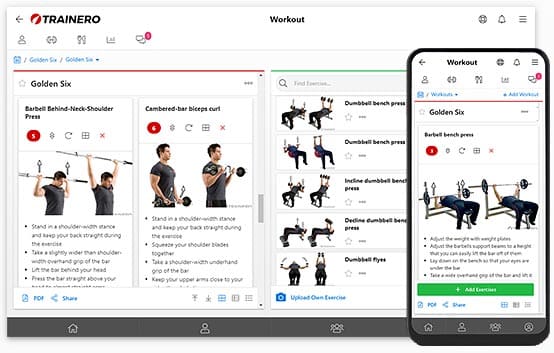
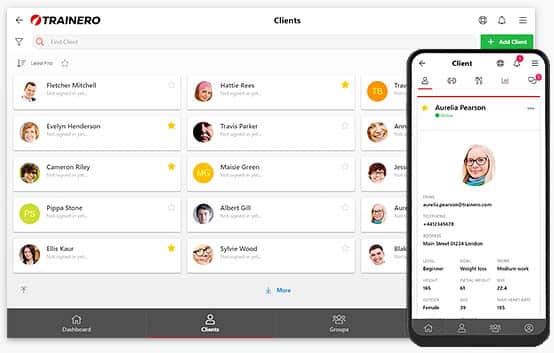
- Client management software — Trainero for programme design, progress tracking, and client communication
- Scheduling tool — Online booking that syncs with your calendar
- Payment processing — Automated billing and invoicing
- Communication — In-app messaging to stay connected between sessions
- Progress tracking — Photo progress, measurements, and performance metrics
Pro tip: Choose an all-in-one platform like Trainero that handles programme design, scheduling, and client communication in one place — rather than juggling multiple apps that don’t talk to each other.
Free Personal Trainer Business Plan Template
Ready to create your own plan? Here’s a simple framework you can follow:
- Executive Summary — Business overview, mission, vision
- Business Description — Legal structure, location, certifications
- Services & Pricing — What you offer and at what price points
- Market Analysis — Competition, target demographic, industry trends
- Marketing Strategy — How you’ll attract and retain clients
- Financial Projections — Revenue targets, expenses, break-even analysis
- Operations Plan — Daily workflow, technology, systems
- Growth Roadmap — 6-month, 1-year, and 3-year milestones
Common Mistakes to Avoid
- Skipping the numbers: A business plan without financial projections is just a wish list
- Trying to serve everyone: Pick a niche and own it
- Underpricing services: Know your worth and charge accordingly
- Ignoring online presence: Even if you train in-person, clients find you online first
- No systems from day one: Use professional software for scheduling, programming, and payments from the start
- Forgetting continuing education: Budget for ongoing learning to stay relevant
Take Action Today
Your personal trainer business plan doesn’t need to be perfect — it needs to exist. Start with the template above, fill in what you know, and refine as you learn more about your market and clients.
The personal trainers who build sustainable businesses aren’t necessarily the best coaches — they’re the ones who treat their passion like a business from day one.
Ready to streamline your personal training business? Try Trainero free and see how the right technology can help you deliver better results while spending less time on admin.

Unlock your fitness potential with Trainero! Get a 14-day free trial and access personalized workout plans, expert coaching, and progress tracking—all in one app. No commitments, just results. Start your free trial today and take your fitness journey to the next level!